UNCP Receives $4.86 Million from Golden LEAF for Optometry Program
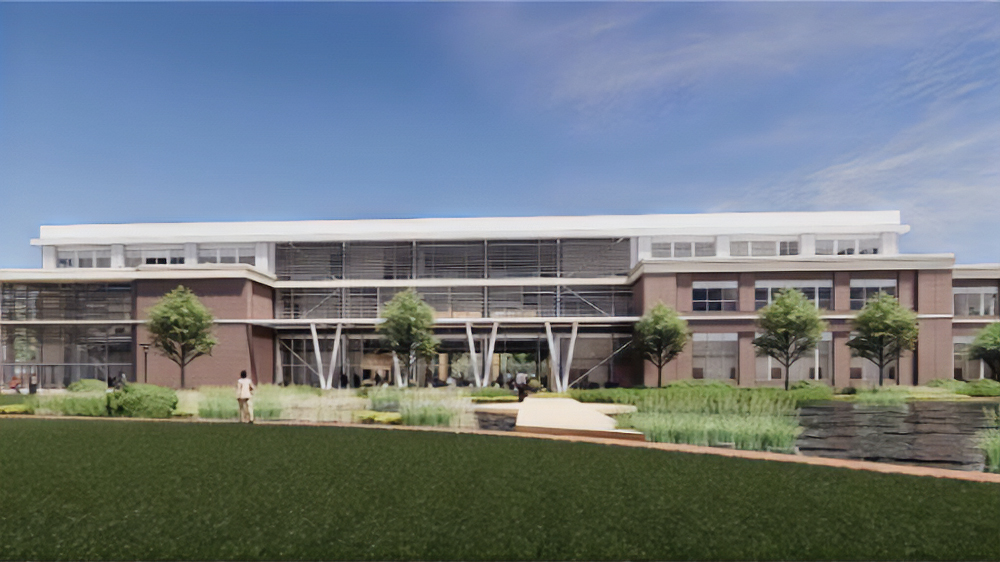
As UNC Pembroke prepares to break ground on its new Clinical Sciences Building this Friday, April 10, major funding from the Golden LEAF Foundation is helping shape the future of healthcare in southeastern North Carolina.
Golden LEAF has awarded $4,864,368 to support the UNCP College of Optometric Medicine, funding critical clinical and training lab equipment to enable hands-on learning and advanced technology-based patient care.
The College of Optometric Medicine will be housed in the university's new $96 million, 74,000-square-foot Clinical Sciences Building and will feature advanced clinical training labs, simulation spaces and patient care areas. The college will be the first public optometry school in North Carolina and the first within the UNC System.
Scott T. Hamilton, president of the Golden LEAF Foundation, said the award reflects a shared commitment to strengthening rural communities and expanding access to healthcare services across North Carolina.
This strategic approach strengthens the healthcare workforce, improves access to care and supports long-term economic vitality in rural North Carolina
“The new college will provide state-of-the-art training and hands-on clinical experiences in rural and underserved communities,” said Hamilton. "Golden LEAF is a proud supporter of the state's first public college of optometric medicine.”
National projections suggest that rural communities could face a shortage of nearly 70% of the eye care providers they need by 2035, making it increasingly difficult for residents to access timely care close to home. That shortage is already evident in North Carolina, where 13 counties lack a single optometrist.
The UNCP College of Optometric Medicine is designed to help meet that need by preparing future optometrists to serve in areas where access to care is limited. The program's proposed curriculum emphasizes early, hands-on learning, with plans for students to enter clinical settings as early as the second year. Through a hybrid model blending simulation training, live patient care and rural clinical experiences, the program will prepare graduates for practice in a range of clinical environments.
“We are grateful for Golden LEAF's investment, which will strengthen our ability to prepare highly skilled optometrists while addressing critical healthcare needs across rural North Carolina,” said Chancellor Robin Gary Cummings, MD. “The vision for UNCP's College of Optometric Medicine extends beyond traditional eye care, preparing optometric physicians to play a critical role in the overall health of the communities they serve.”
Optometrists are not only the primary defense against eye disease, he said, but also play a critical role in early detection of systemic health conditions such as diabetes and hypertension, often before symptoms appear.
That role is especially important in southeastern North Carolina. Robeson County has historically ranked near the bottom of statewide measures for obesity, heart disease, diabetes, cancer, infant mortality and mortality among minors — challenges that have persisted for generations and underscore the need for greater access to quality health care.

According to a study by the University of North Carolina at Chapel Hill's Sheps Center, UNCP's primary service region has fewer health professionals per 10,000 residents than the state average across each profession studied. The study also concluded that expanding academic programs at UNCP could help address regional workforce shortages and improve long-term health outcomes.
Following the Sheps study in 2018, UNCP launched a major health sciences expansion with the formation of the College of Health Sciences, bringing together counseling, kinesiology, nursing and social work to address the region's complex health and social challenges. Since then, UNCP has developed new programs, including a Doctor of Nursing Practice, a Master of Science in Occupational Therapy and a Master of Healthcare Administration.
The addition of the College of Optometric Medicine represents another critical step in that work.
Dr. Rich Castillo, founding dean of the College of Optometric Medicine and a nationally respected leader in optometric education with dual training as both an ophthalmologist and optometrist, said the UNCP program is grounded in both access and impact.
Castillo brings decades of experience in clinical practice and academic leadership, with a national reputation for advancing optometric education and expanding access to care in underserved communities.
“This is about creating opportunity and meeting real needs across our state,” Castillo said. “With the assistance of the Golden LEAF Foundation and our North Carolina legislature, we will have a world-class facility to prepare future graduates to make an immediate impact — improving access to care in the communities that need it most.”