James B. Ebert Wildflower Garden
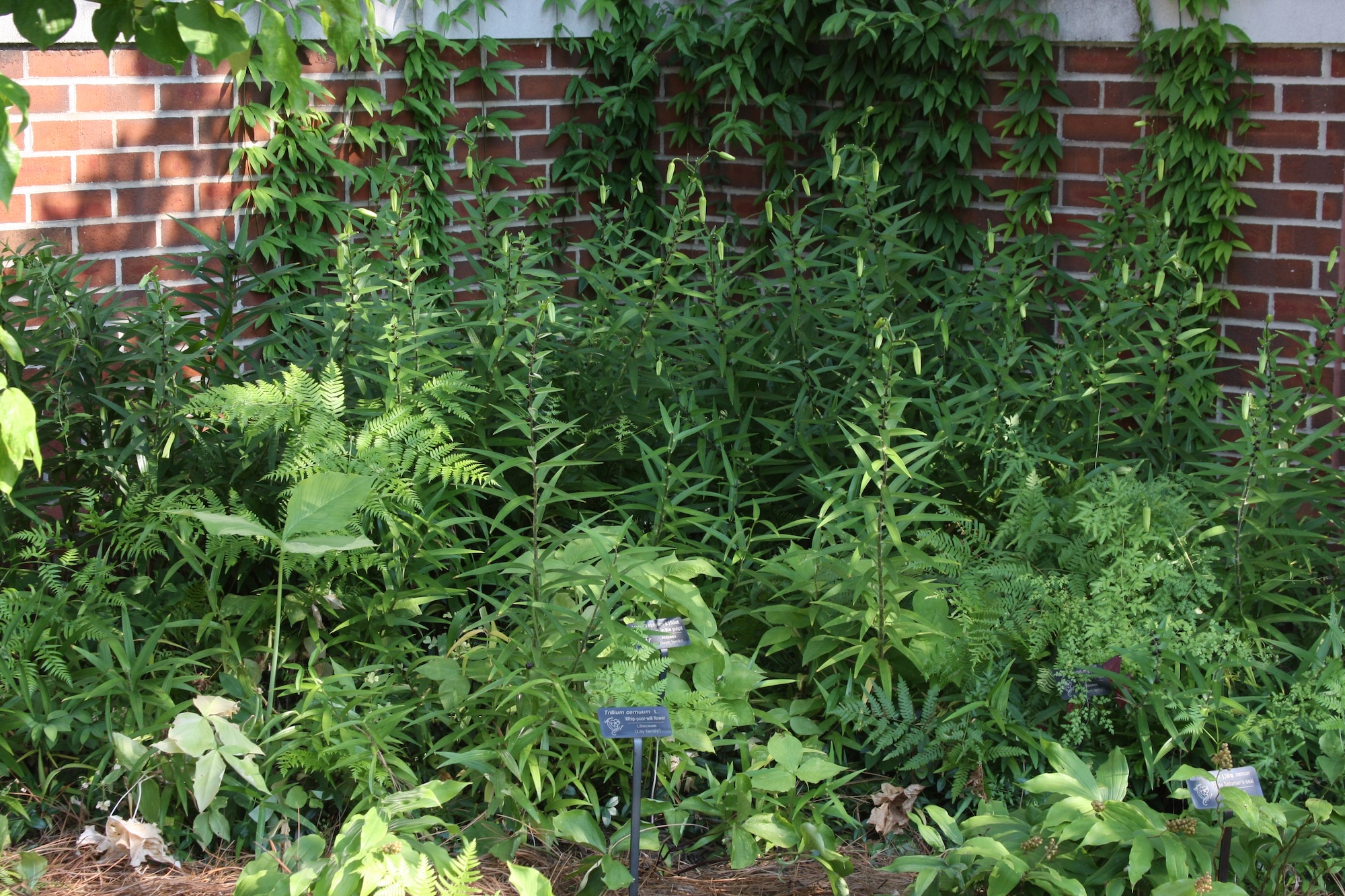
Step into a living classroom at the James B. Ebert Memorial Wildflower Garden — an inspiring space where science, education and natural beauty come together. Managed by UNC Pembroke's Biology Department, the garden features a diverse collection of native and regional plant species that support both hands-on student learning and community engagement. Whether you're studying plant ecology, exploring pollinator habitats or simply enjoying the serenity of this natural space, the Ebert Garden offers a unique opportunity to connect with the environment and experience biology in action.
Wildflowers
Butterfly milkweed, littlebrownjug, mayapple and bloodroot are among the nearly two dozen species of native wildflowers in the Dr. James B. Ebert Native Wildflower Garden. Most of the wildflowers in the garden bloom in early spring, an adaptation that may permit a “head start” on reproduction while sunlight is still plentiful and temperatures are rising. Little sunlight reaches the forest floor, late in spring, after the canopy in their forested habitat is in full leaf. Many of the wildflowers not only emerge in early spring, but they die back soon thereafter, only to reappear the next spring.
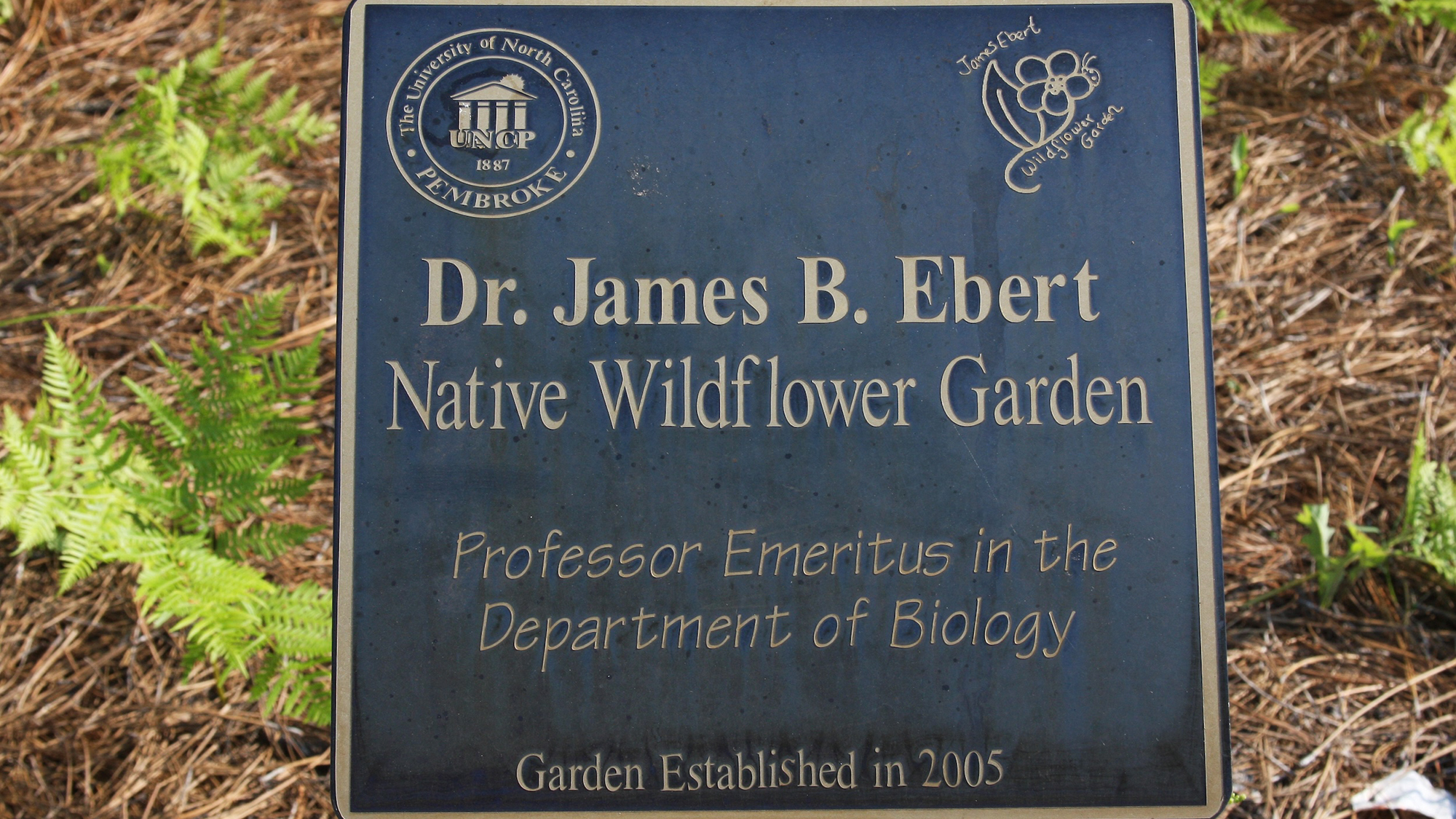
The wildflowers are the generous donation of Dr. James B. Ebert, professor emeritus and long-time member of the biology faculty. The garden was established in 2005 when Dr. Ebert transplanted the wildflowers from his home garden, on the west edge of the UNCP campus, to their present location on the northwest corner of the Oxendine Science Building. Each species in the garden is labeled with a metal stake and name plate, indicating its common and scientific names.
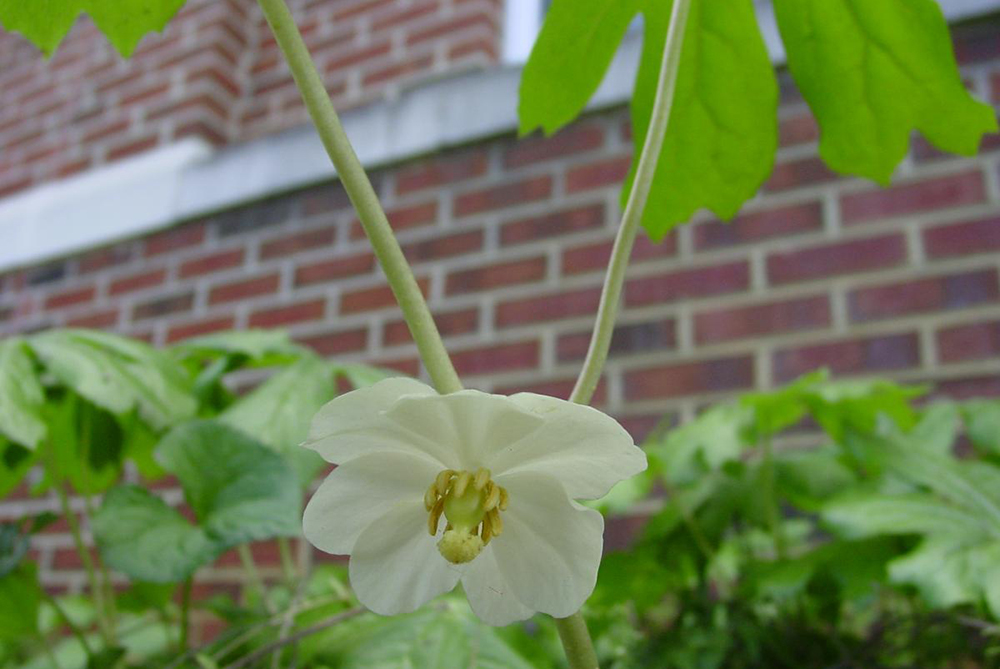
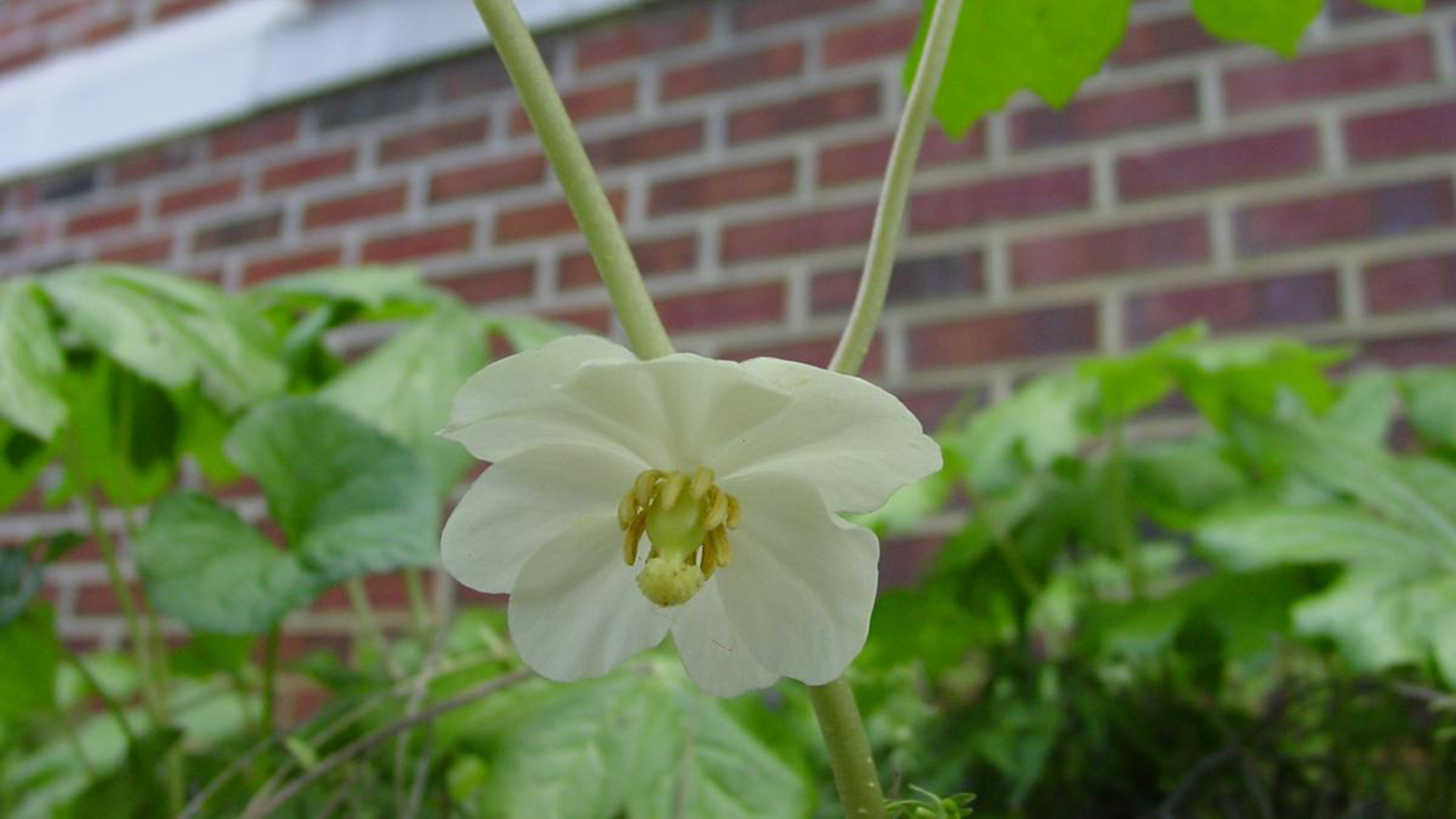
Mayapple Blossom
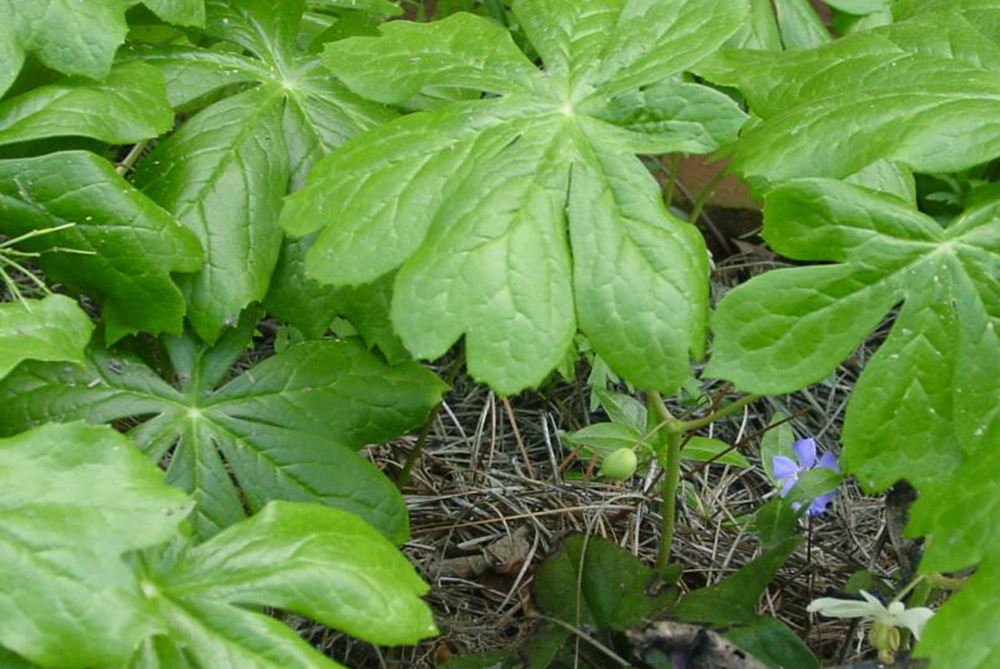
Mayapple Berry
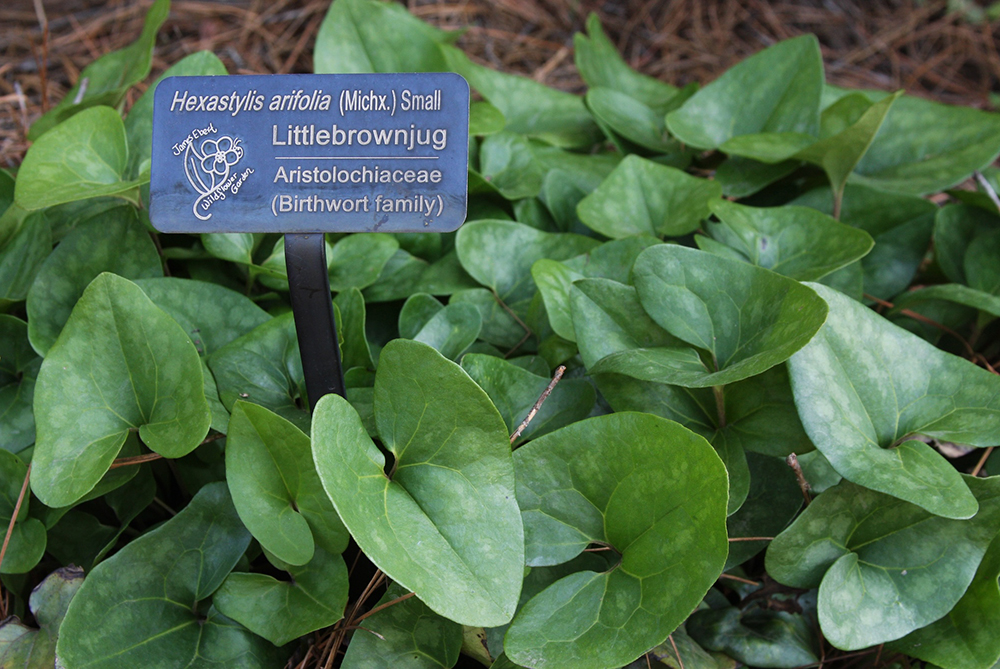
Littlebrownjug
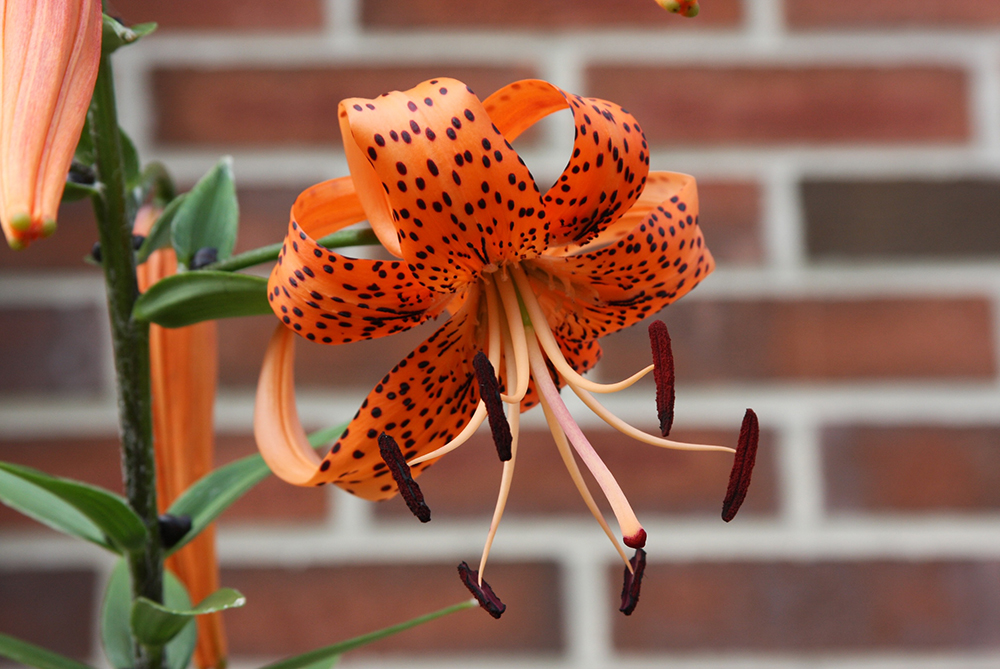
Tiger Lily

Butterfly Milkweed
The Wildflowers of Ebert Garden
| Scientific Name | Common Name |
|---|---|
| Arisaema triphyllum (L.) Schott | Jack in the pulpit |
| Asclepias tuberosa L. | butterfly milkweed |
| Asplenium platyneuron (L.) B.S.P. | ebony spleenwort |
| Cardamine concatenata (Michx.) Sw. | cutleaf toothwort |
| Erythronium americanum Ker-Gawl. | dogtooth violet |
| Gelsemium sempervirens (L.) Ait. f. | yellow jessamine |
| Hexastylis arifolia (Michx.) Small | littlebrownjug |
| Hexastylis virginica (L.) Small | Virginia heartleaf |
| Lilium lancifolium Thunb. | tiger lily* |
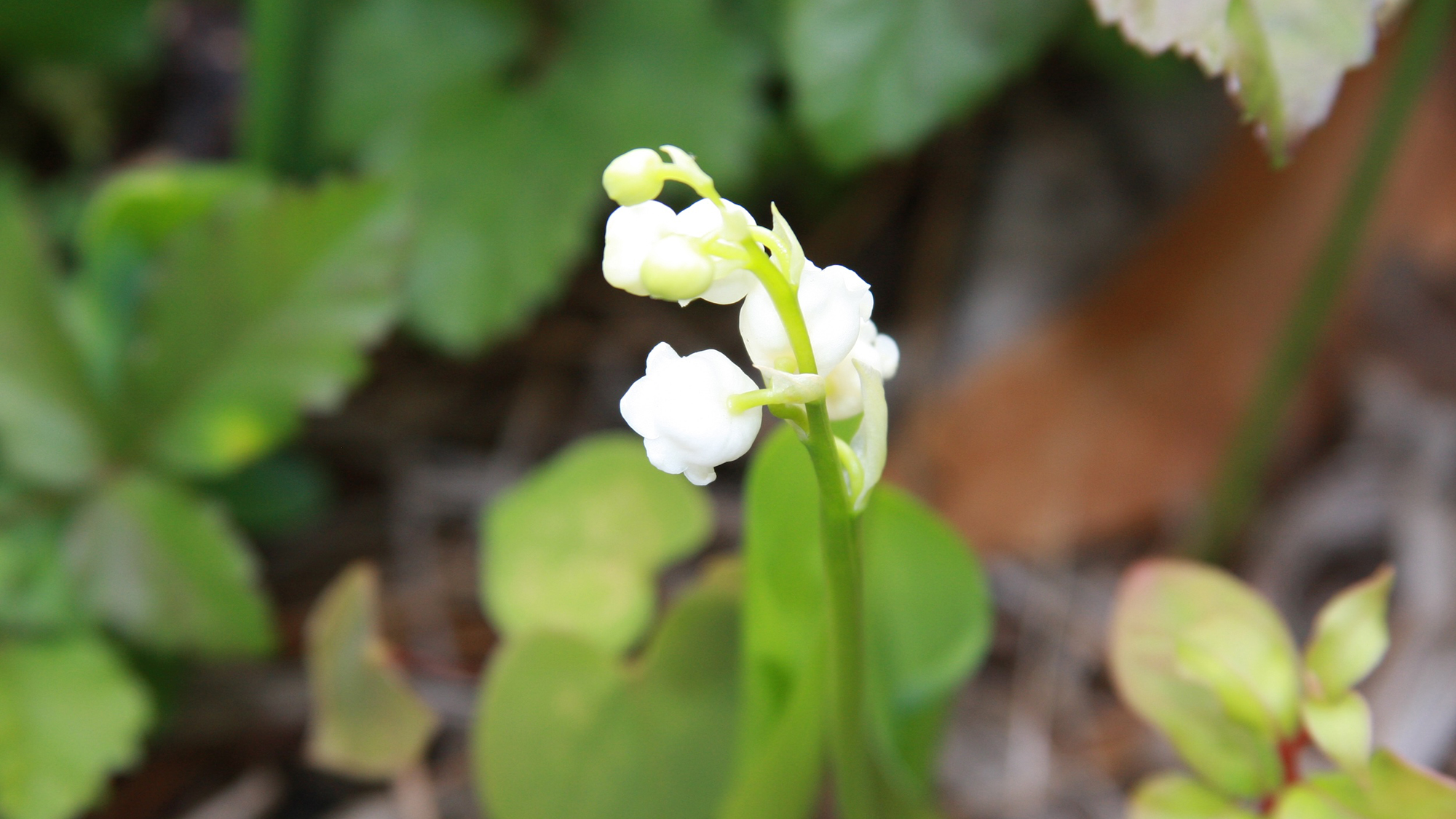
| Maianthemum canadense Desf. | Canada mayflower |
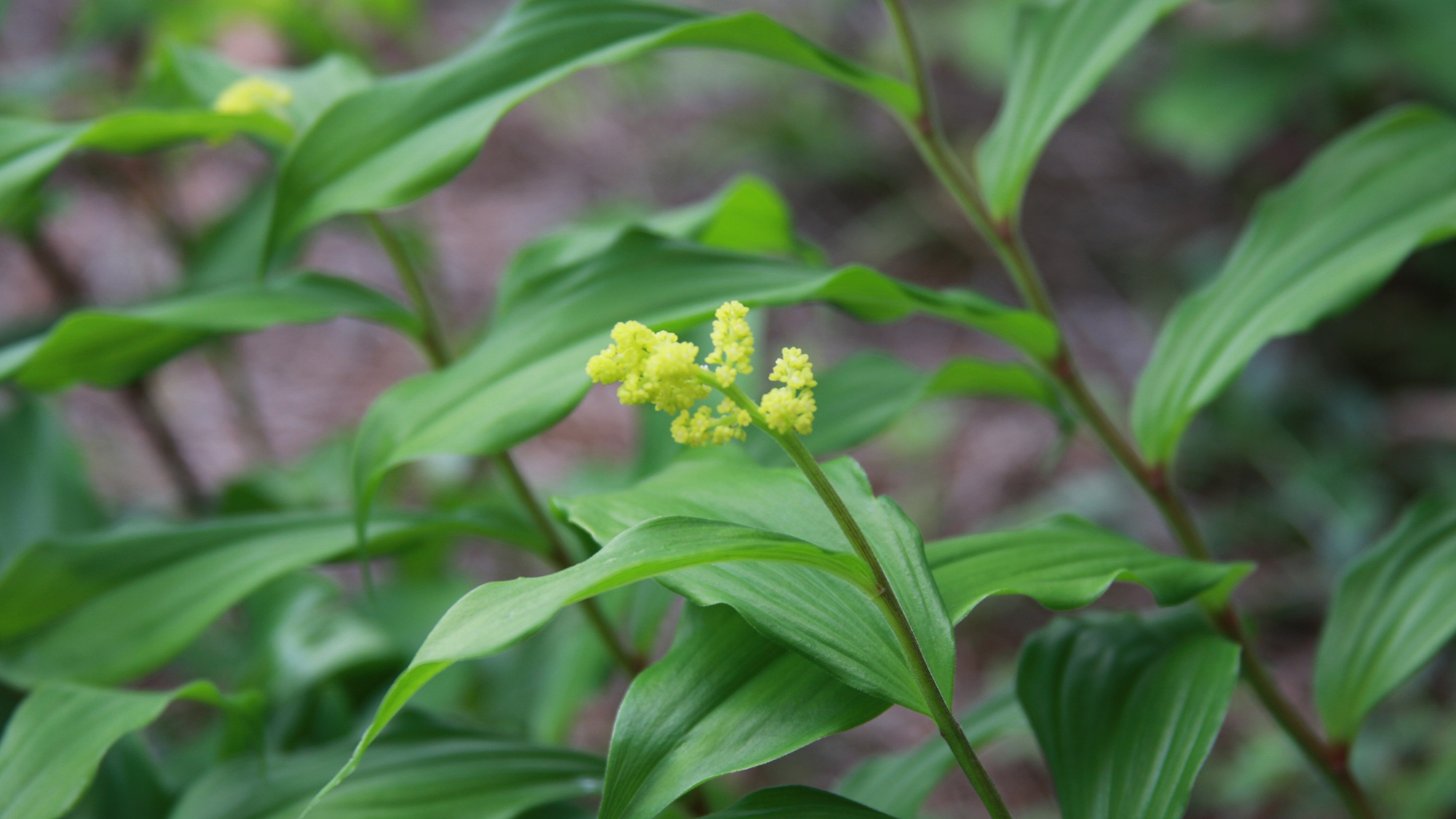
| Maianthemum racemosum (L.) Link | false Soloman's-seal |
| Mitchella repens L. | partridgeberry |
| Podophyllum peltatum L. | mayapple |
| Pteridium aquilinum (L.) Kuhn | western brackenfern |
| Sanguinaria canadensis L. | bloodroot |
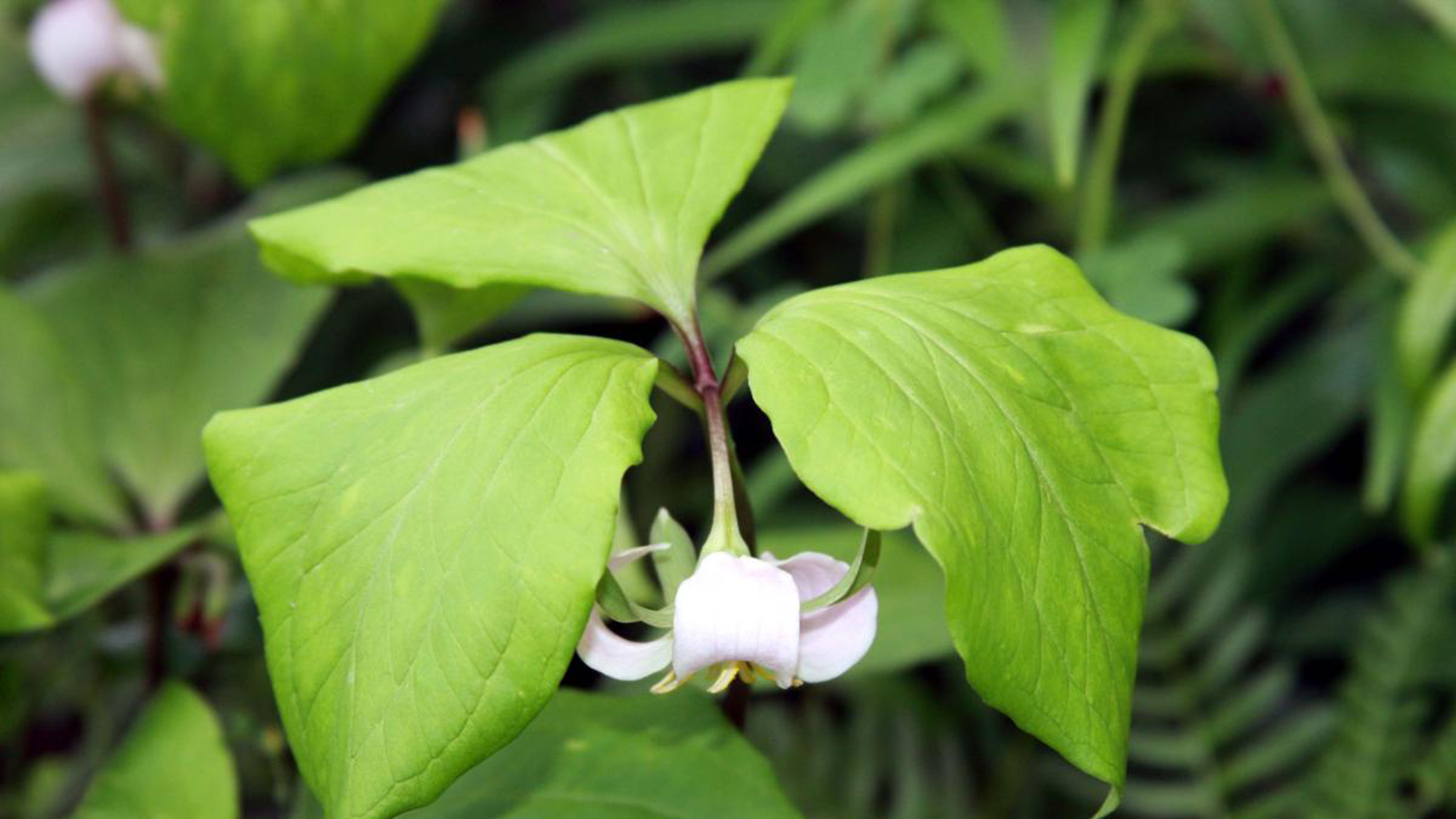
| Trillium cernuum L. | whip-poor-will flower |
| Uvularia perfoliata L. | perfoliate bellwort |
| Uvularia sessilifolia L. | sessileleaf bellwort |
| Viola sp. | violet |
| Vinca minor L. | common periwinkle* |
*Introduced, or non-native, species
James B. Ebert, ScD (Hon.)
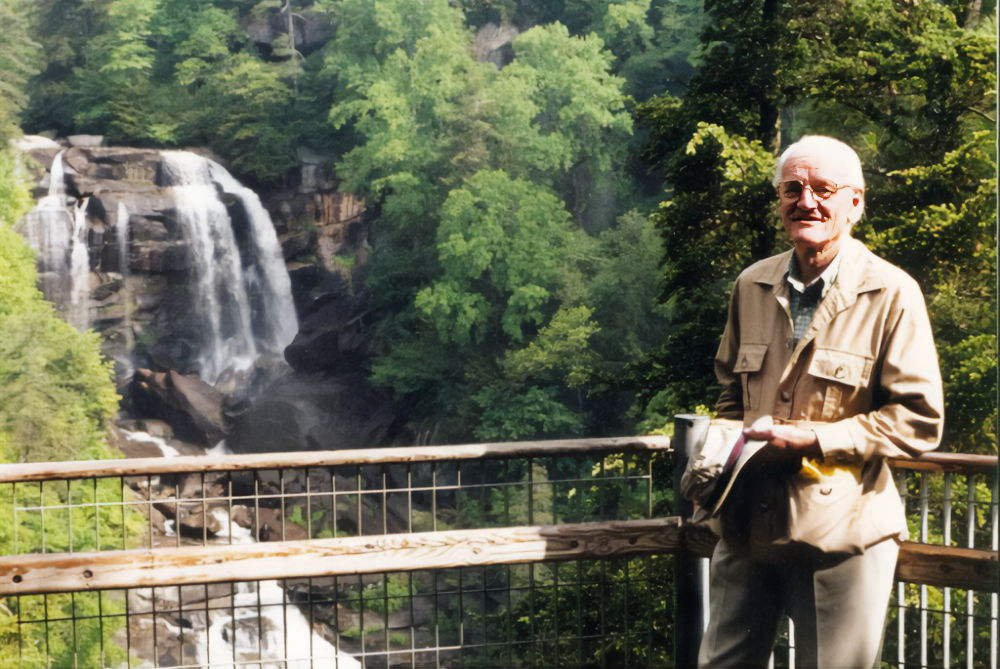
Serving as a practicing forester introduced him to the major plant communities of eastern North Carolina and the Southeast. Further study at Duke University expanded his knowledge of plant and animal communities found in the region. With this background, he was prepared to teach a broad range of courses in the biological sciences. While teaching a variety of botanical and zoological courses over some 47 years, ecology was a primary interest.
As a field ecologist, he conducted numerous field courses, collecting many kinds of plants and animals native to North Carolina and the Southeast. In his course, Principles of Ecology, he required every student to accompany him on a field trip to the estuaries of coastal North Carolina. Here, students learned firsthand how plants and animals have adapted to their environments.
While studying native, upland plant and animal communities, such as pine forests, hardwood forests and open fields, he collected many endemic flowering plants that, because of commercial and residential development, were increasingly difficult to find. The purpose of the collections was to preserve live plants in natural, maintained habitats.
At retirement, Dr. Ebert transferred these plants from his home garden to the site honoring him, and bearing his name, located on the UNCP campus at the northwest corner of the Oxendine Science Building. The garden is maintained by interested faculty, students, and grounds staff. Dr. Ebert passed in 2021 while residing in the Wesley Pines Retirement Community in Lumberton, North Carolina, and is survived by his wife Eleanor.